
 ProductsGuideHub
Independent review · Updated November 2026
Your dog isn’t stubborn.
He’s bored.
An honest look at Brain Training for Dogs — a 7‑module, force‑free program built by a CPDT‑KA certified trainer — and whether it’s worth $67 for a dog that pulls, barks, jumps, or simply doesn’t listen.
60-day money back One-time $67 · no subscription Instant digital access

Does this sound like your house?
You’ve tried “no.” You’ve tried treats. You’ve tried being firmer.
Nothing stuck past Tuesday. Before you buy another program, it’s worth understanding why the standard advice fails — because the problem usually isn’t the dog.
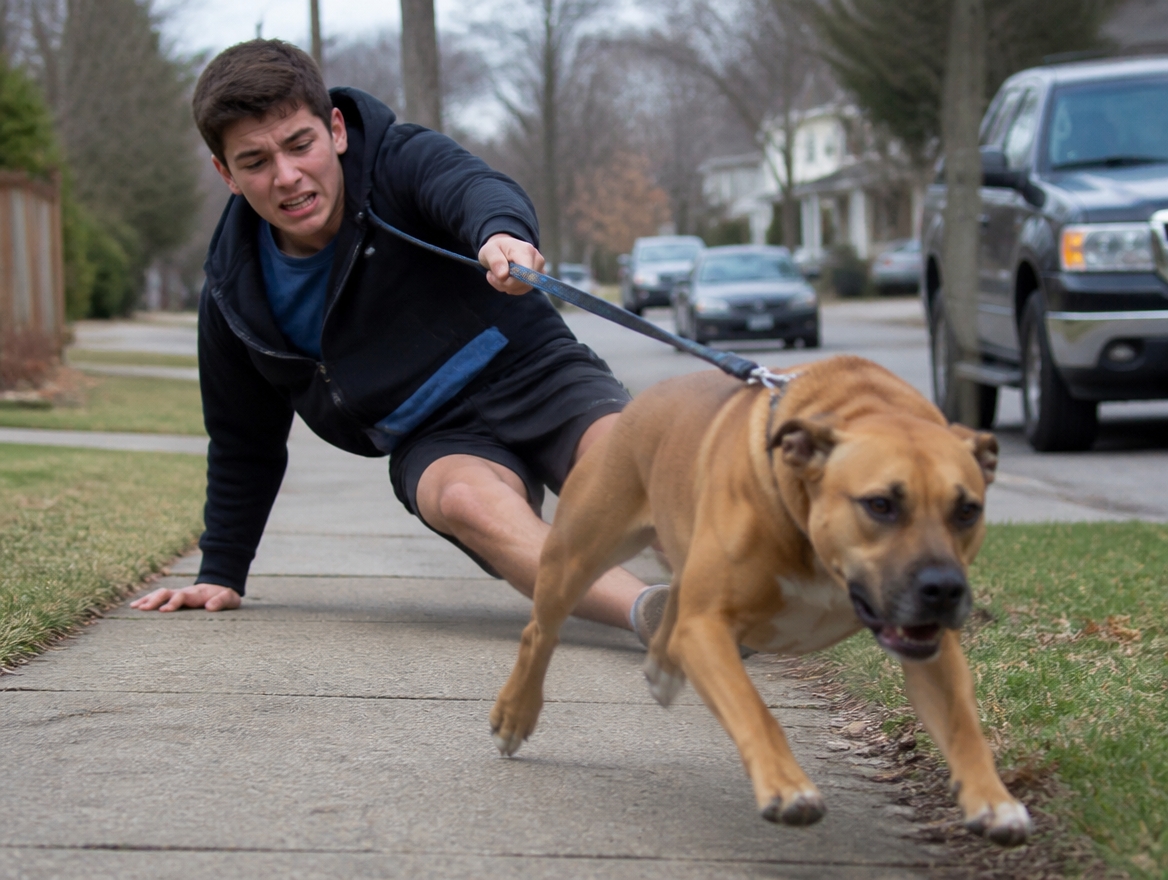
- Walks become a tug-of-war the second the leash clips on.
- You say “come” and he looks at you like you’re speaking a different language.
- The doorbell turns a calm dog into a 40-pound alarm system.
- You’ve bought two or three training books. None of them made a difference.
- Guests get jumped on before they’re fully through the door.
- You’ve started walking at 6 a.m. to avoid the neighbors and their dogs.
Why “sit, stay, no” plateaus
A dog that pulls, barks at the window, chews furniture and won’t hold a down-stay for ten seconds isn’t usually a dog that has never heard a command. It’s a dog with energy and problem-solving drive and nowhere to put them.
So the dog invents a job. Guarding the doorbell. Herding the mail carrier. Testing whether the couch is still off-limits. The behavior isn’t random — it’s output.
Which is the whole argument behind this program: put structured mental work in front of the dog, and a surprising share of the “problems” stop being rehearsed often enough to survive.
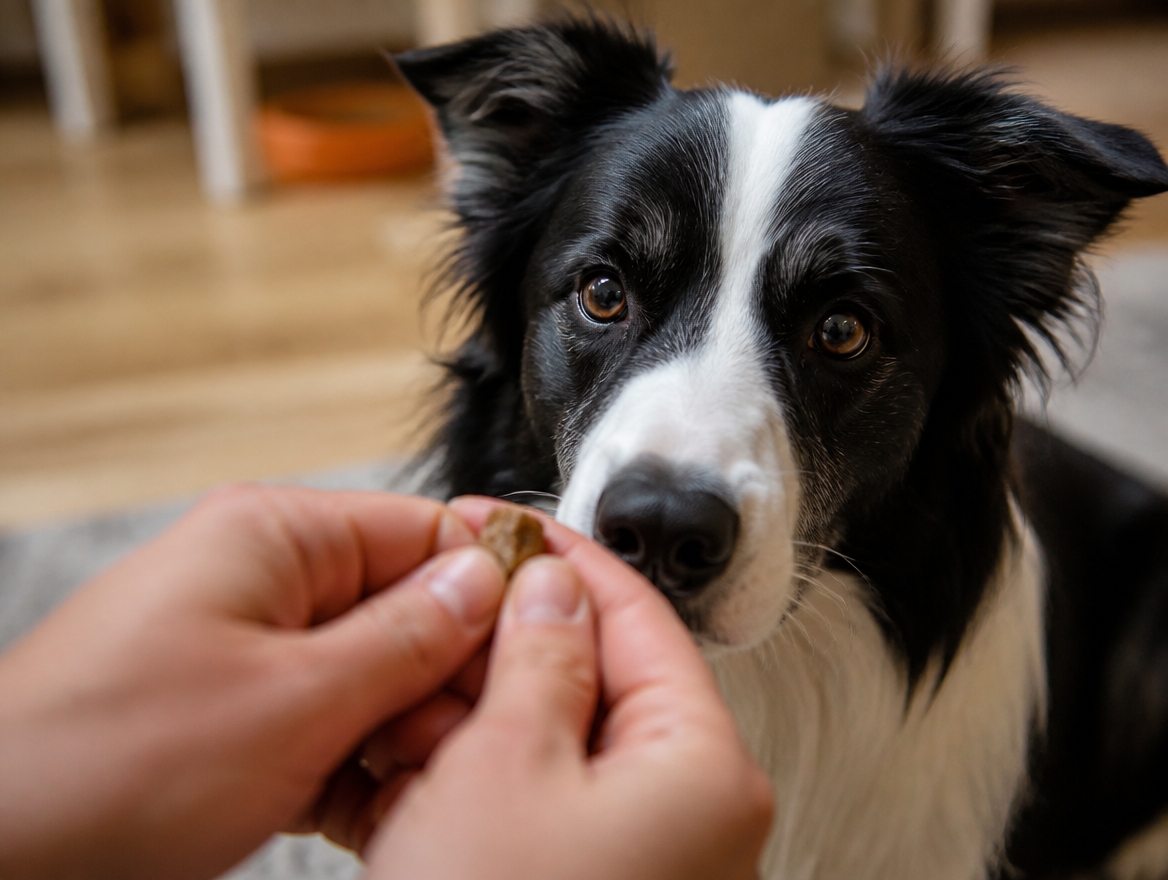
The usual approach vs. this one
Our verdict
Scored on what actually matters to a dog owner
Weighted toward results, not production value: does following the program, in order, change what happens in your hallway?
Brain Training for Dogs — editorial breakdown
Six criteria, weighted toward results over polish
-
Depth of content7 modules, obedience course, 100+ behavior articles9.8
-
Training methodologyForce-free, positive reinforcement, no aversive tools9.8
-
Beginner friendlinessClear progression, but it asks for real daily practice9.2
-
Problem-specific fixesBarking, jumping, digging, chewing, whining covered directly9.5
-
Format & deliverySelf-paced online lessons. No live coaching or one-on-one support8.0
-
Value at $67Versus up to $350/hour for a private trainer, per the vendor10
Opens the official page60-day money back
How we evaluated it
We reviewed the public course outline, the author’s professional credentials (CPDT-KA certification), the vendor’s published refund terms, and the full list of modules, bonuses and resources. We did not receive a free copy for review, and no one paid for this placement. Individual results depend on the dog, the household and how consistently the program is followed.
Inside the program
Seven modules, built like school years
The structure is the product. Each module builds on the last one — which is why it suits dogs that didn’t respond to quick-fix courses. You don’t jump to “stop barking.” You build the attention first.
-
01Preschool
The foundation
Target training, eye-contact work and the “airplane” game. This is where the dog learns that looking at you pays better than looking at the window.
-
02Elementary
Senses and focus
Treasure hunt, muffin game, ball pit. Scent and problem-solving work that can tire a dog out as much as a walk around the block.
-
03High School
Patience and impulse control
Jazz up / settle down, the bottle game, bobbing for treats. This is where “stop jumping on guests” starts to click.
-
04College
Motor skills and concentration
Shell game, open sesame, magic carpet. Coordination work that keeps a high-drive dog busy indoors.
-
05University
Intelligence and patience
Hide and seek, “look at that,” hot and cold. Impulse control under distraction — the thing most owners actually need on a leash.
-
06Graduation
Advanced control
Leg weaving, serpentines and spirals, name recognition. Reliable response even when the dog is excited.
-
07Einstein
Genius level
Tidy up, ring stackers, play the piano. Won’t fix a behavior problem by itself — but it keeps training fun long after the problem behaviors fade.
Before you buy
Who this works for — and who should skip it
The fastest way to waste $67 is to buy the wrong kind of product. Here’s the honest split.
Good fit if…
- You have a bored, high-energy, or highly intelligent dog — a shepherd, collie, terrier, lab, or a rescue with no off-switch.
- You want to fix behavior without punishment, prong collars, or shouting.
- You can give 10–15 focused minutes a day, most days, for a few weeks.
- You’d rather pay $67 once than up to $350 an hour for a private trainer.
Skip it if…
- Your dog has a diagnosed medical or severe anxiety condition. Start with your vet or a veterinary behaviorist — this is a training course, not treatment.
- You want a 30-minute video that solves everything tonight. No legitimate program can promise that.
- You have a bite history or aggression case that needs hands-on assessment.
- You want hands-on, in-person coaching. This is a self-paced online course.
Price & guarantee
What $67 actually buys
Everything included with a single purchase
- All 7 modules — Preschool through Einstein
- Obedience 101 + Polishing Up Your Training
- Adrienne’s Archive — 100+ behavior articles
- Bonus: Behavior Training for Dogs (vendor lists a $67 value)
- 7 trick training videos
- Private member forum
For context: the author’s own sales page compares the price with in-person trainers who charge up to $350 per hour. That comparison is theirs, not ours — but a single in-person session still costs several times what this entire course does.
60-day unconditional guarantee. If it isn’t what you expected, email the vendor within 60 days and you get your money back — no questions asked. Orders are processed by ClickBank, a major US-based retailer of digital products.
Straight answers
The questions people actually ask
Is this a physical book or a digital course?
Digital. You get access to a member area with the modules, videos and articles — delivered immediately after purchase, on any device. There’s nothing to ship and no waiting.
Will it work on an older dog, or a rescue with habits?
The program is written for dogs of any age — the “Preschool” module exists precisely because adult dogs often need the foundations rebuilt before anything else works. Older dogs can absolutely learn new behaviors; they may just need shorter sessions. Rescues with unknown history can be harder; start with the first two modules and see whether the dog engages.
Do I need special equipment?
No e-collar or prong collar — the method is force-free by design. Most exercises use treats, everyday household items (cups, bottles, a muffin tin, towels) and a leash, so there’s little or nothing extra to buy.
How much time does it take?
Sessions are short — the exercises are designed as games of a few minutes each, and 10 to 15 minutes a day is the realistic commitment. What matters is consistency rather than volume: five short sessions across a week beat one long Sunday session. Many owners notice better attention and eye contact first; specific problem behaviors usually take longer, and every dog moves at a different pace.
Does it actually stop barking, pulling, jumping or chewing?
The program addresses those behaviors directly in the bonus course and the article archive, and indirectly throughout the modules by building the dog’s impulse control first. What it won’t do is fix a behavior you keep accidentally rewarding — if the dog still gets attention for barking, no course overrides that. That part is on the owner.
Is there a subscription or an upsell I’ll be pushed into?
No subscription. It’s a one-time $67 purchase. Like most ClickBank products the order page may offer an additional product after checkout, which you can decline — that’s your call, and it doesn’t affect access to what you already bought.
What if my dog doesn’t improve?
Use the 60-day refund. Email the vendor’s support within 60 days of purchase and the payment is reversed. No program can promise a specific outcome for a specific dog, which is exactly why the refund window matters more than any testimonial on a sales page.
Is this page an official site for the product?
No. This is an independent review. We’re an affiliate: if you buy through our link we earn a commission at no extra cost to you, and the price is the same as buying direct. All purchases and refunds are handled by the vendor and ClickBank, not by us.
The short version
Your dog has been asking for a job for months.
Seven modules, a certified trainer, force-free methods, and 60 days to decide it wasn’t worth it. The downside is a refund email. The alternative is another year of 6 a.m. walks.
$67 one-time60-day money backInstant access